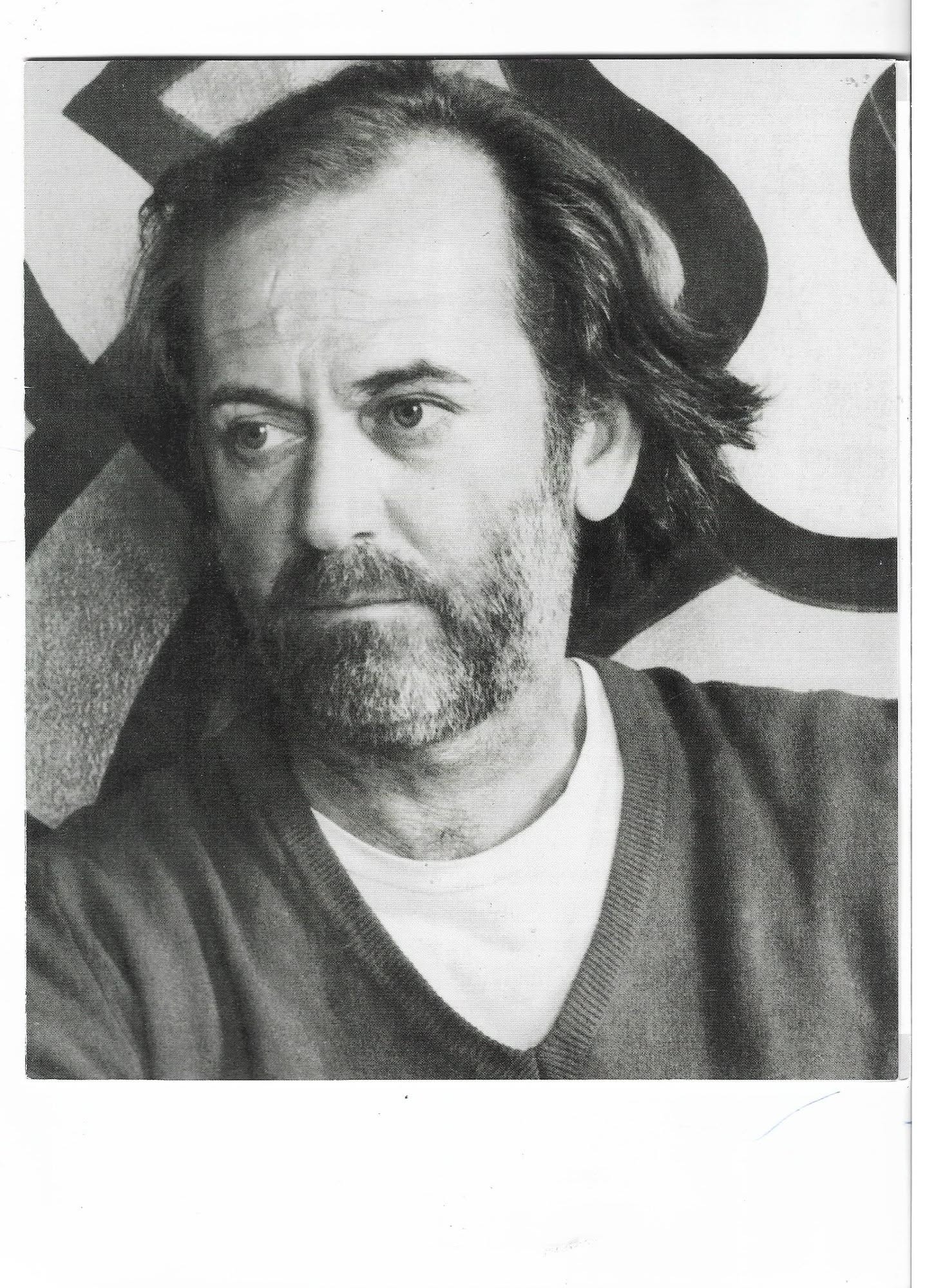
Alexis Akrithakis was one of the most distinctive voices of postwar Greek art, celebrated for his uncompromising spirit, imaginative visual language, and deeply personal approach to creativity.
Largely self-taught, he developed an artistic practice that defied convention, transforming everyday experiences into expressive works filled with recurring symbols and vibrant energy.
Although Akrithakis' interest in painting emerged during his student years, he never received formal artistic training.
A pivotal moment in his development came through his friendship with the philosopher Giorgos Makris, who encouraged his systematic engagement with art and helped shape his intellectual and creative outlook.
Between 1958 and 1960, Akrithakis lived in Paris, where he encountered some of the most influential figures of the European art world, including Alberto Giacometti. During this period, he also formed a close friendship with fellow Greek artist Thanasis Tsingos, further enriching his artistic development. In 1968, he moved to Berlin after receiving a scholarship from the German Academic Exchange Service (DAAD), remaining there for much of the following sixteen years. Berlin exposed him to an international avant-garde environment, where he became acquainted with artist Konstantinos Xenakis and reconnected with theater and dance communities, reviving his long-standing interest in the performing arts.
Akrithakis held his first solo exhibition in 1965 at the French Institute of Athens. Although critics initially responded with caution, his work gradually gained international recognition. He subsequently exhibited in numerous galleries across Europe, including the renowned gallery of Alexandros Iolas, while participating in major group exhibitions both in Greece and abroad. His artistic contribution was formally recognized in 1998 with a major retrospective exhibition at the National Gallery of Greece.
Throughout his career, Akrithakis remained a rebellious and independent figure, refusing artistic or social compromise. His work evolved through several distinctive phases while maintaining a consistent emphasis on spontaneity and personal symbolism.
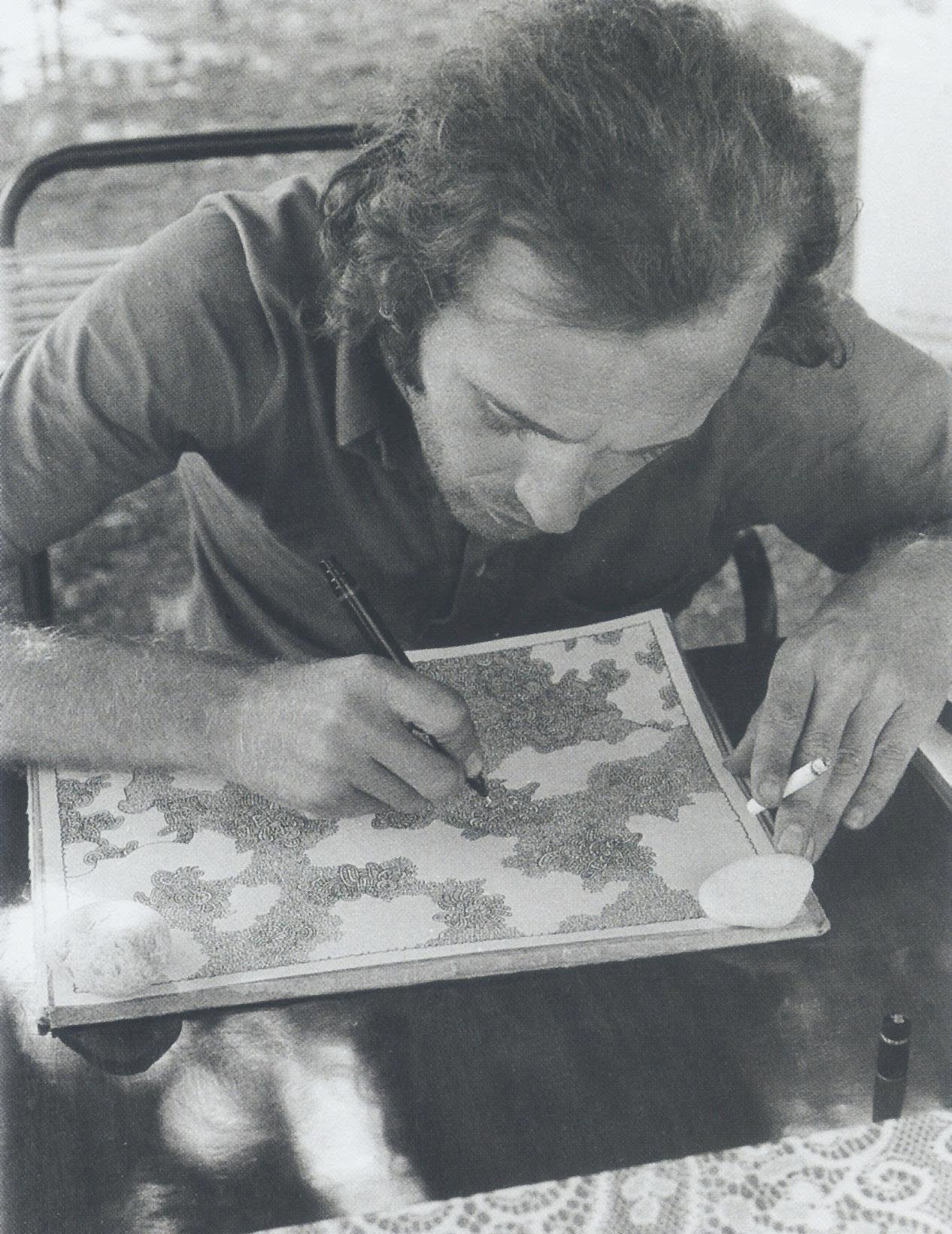
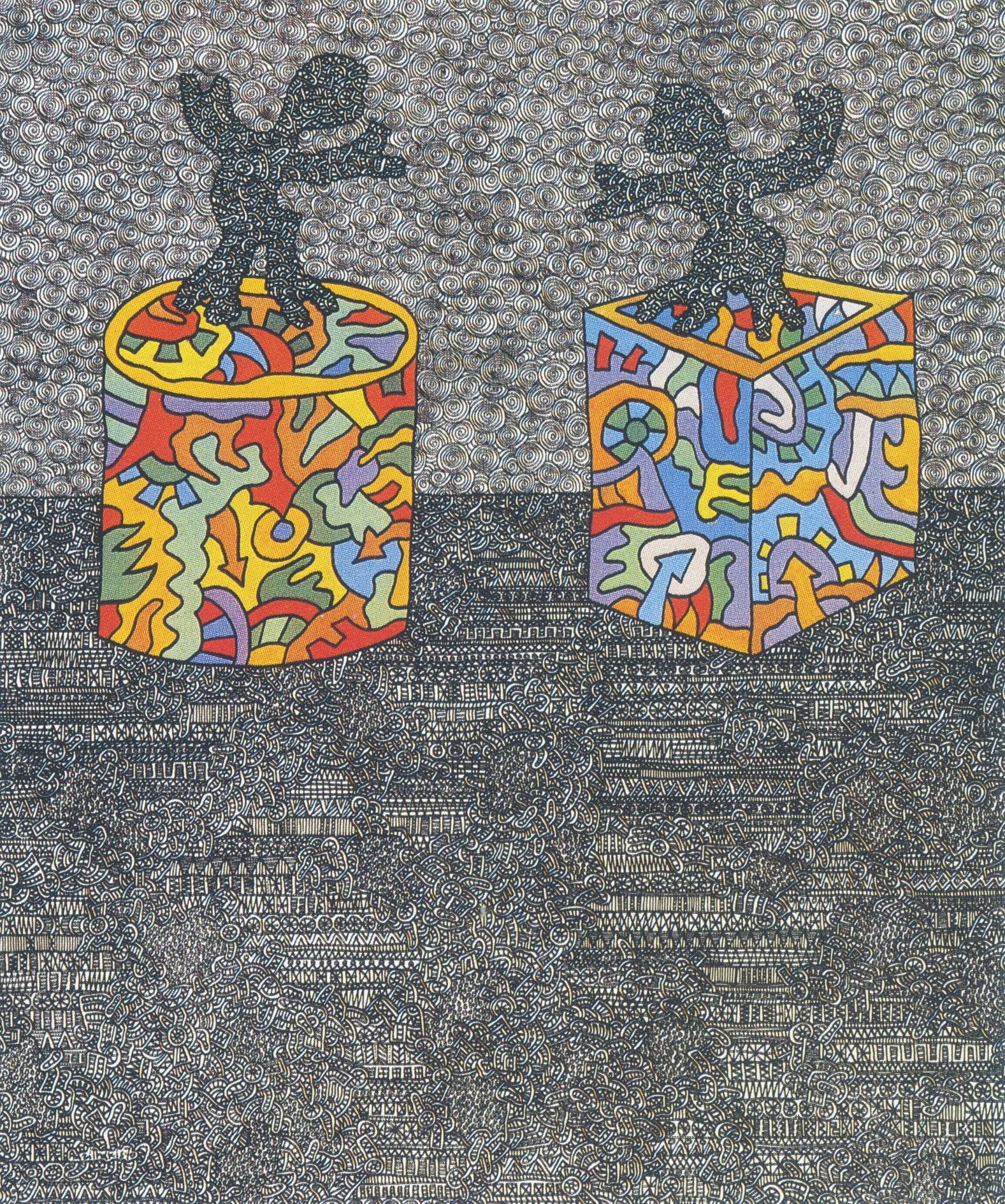
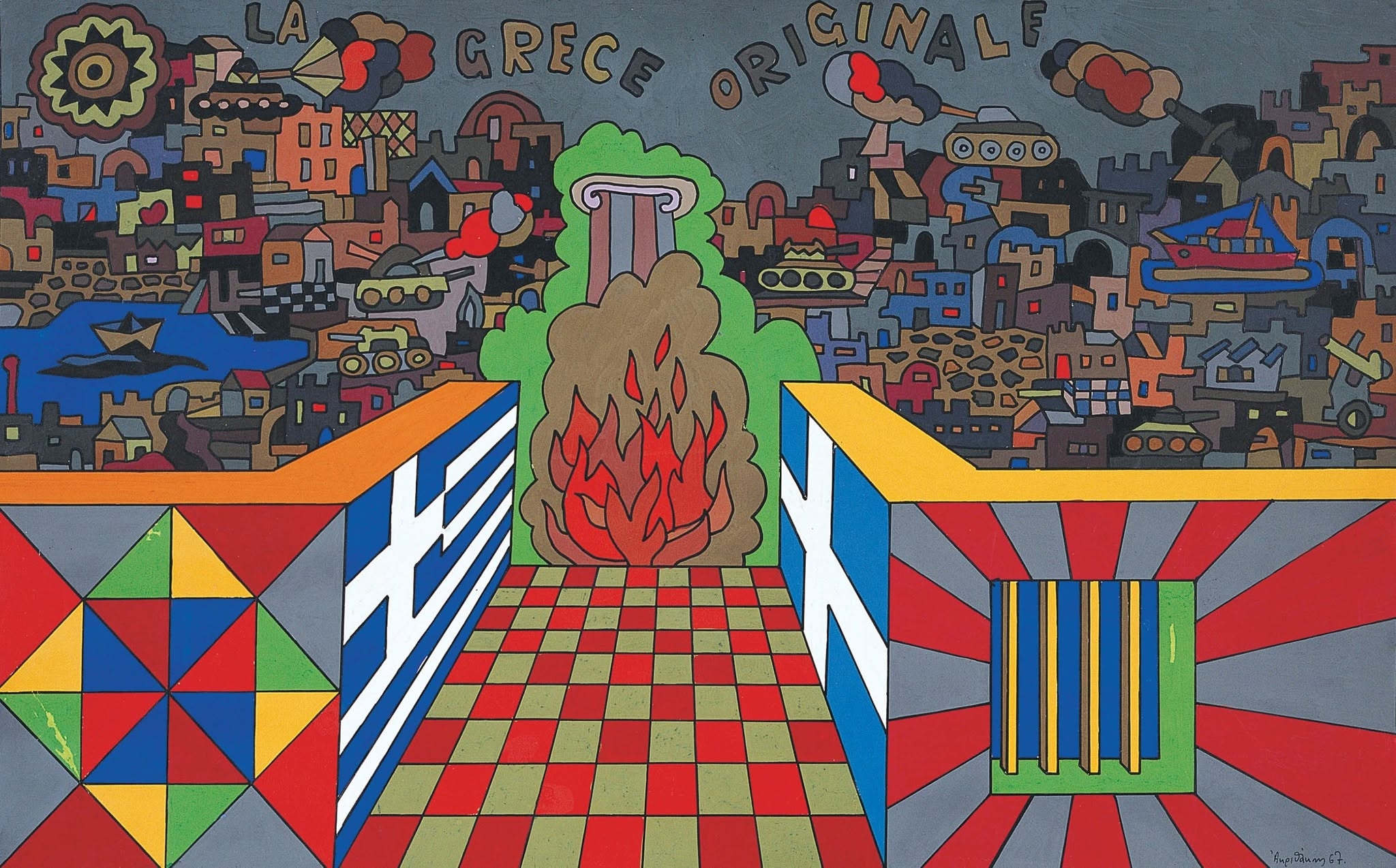
His early works consisted of black-and-white linear drawings known as "tsiki-tsiki," created by allowing a random dot on the paper to become the starting point for intricate compositions.
Over time, he developed a rich vocabulary of recurring motifs that became central to his artistic identity.
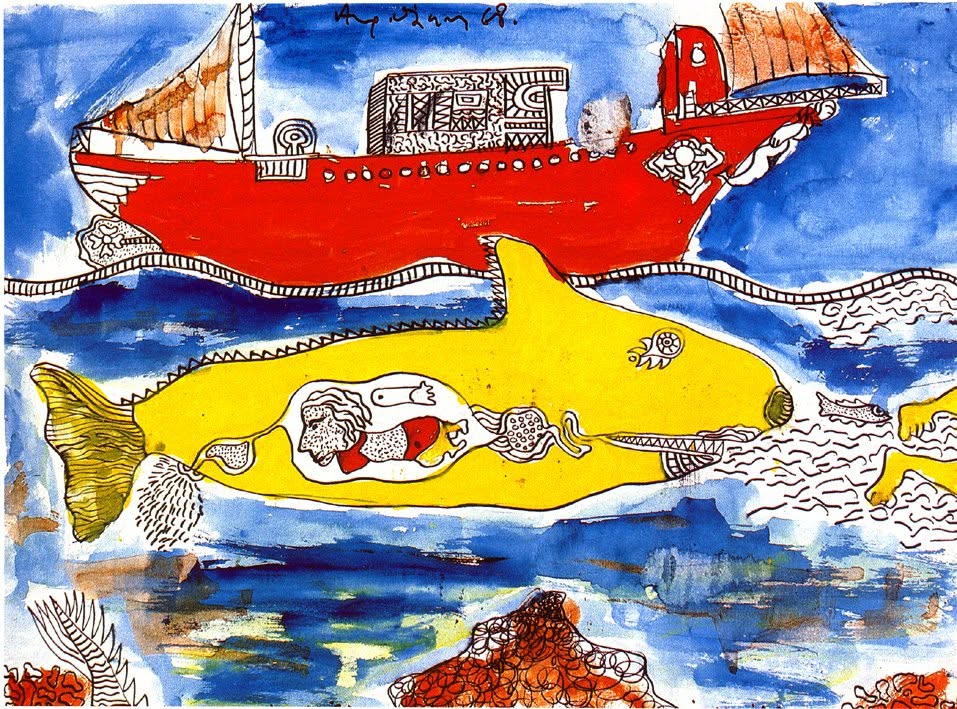
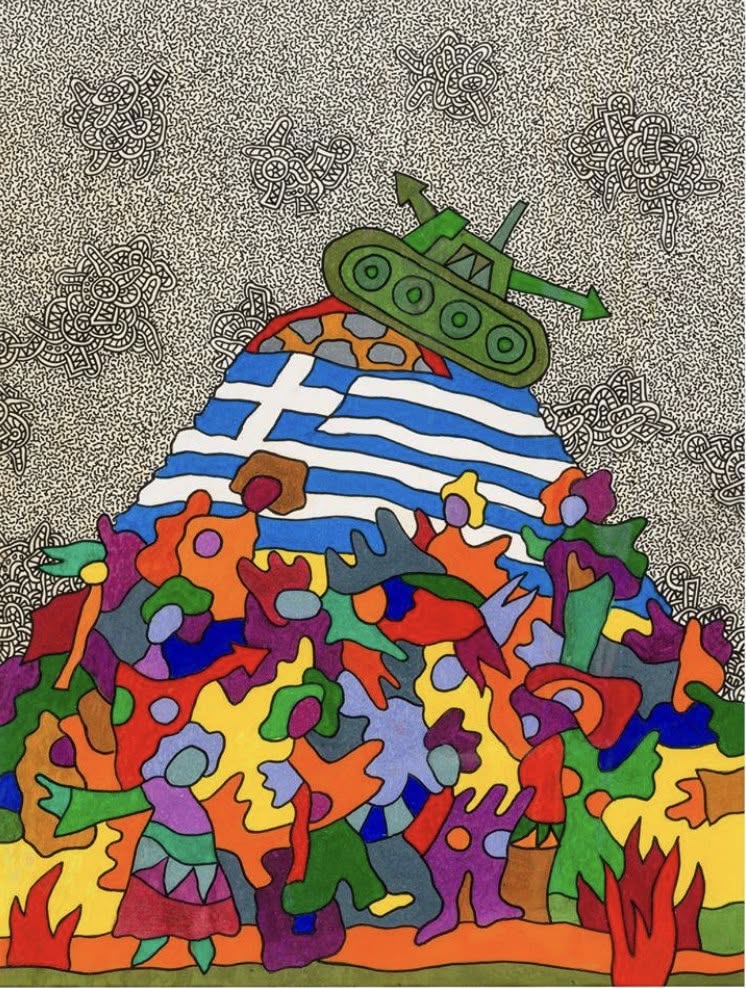
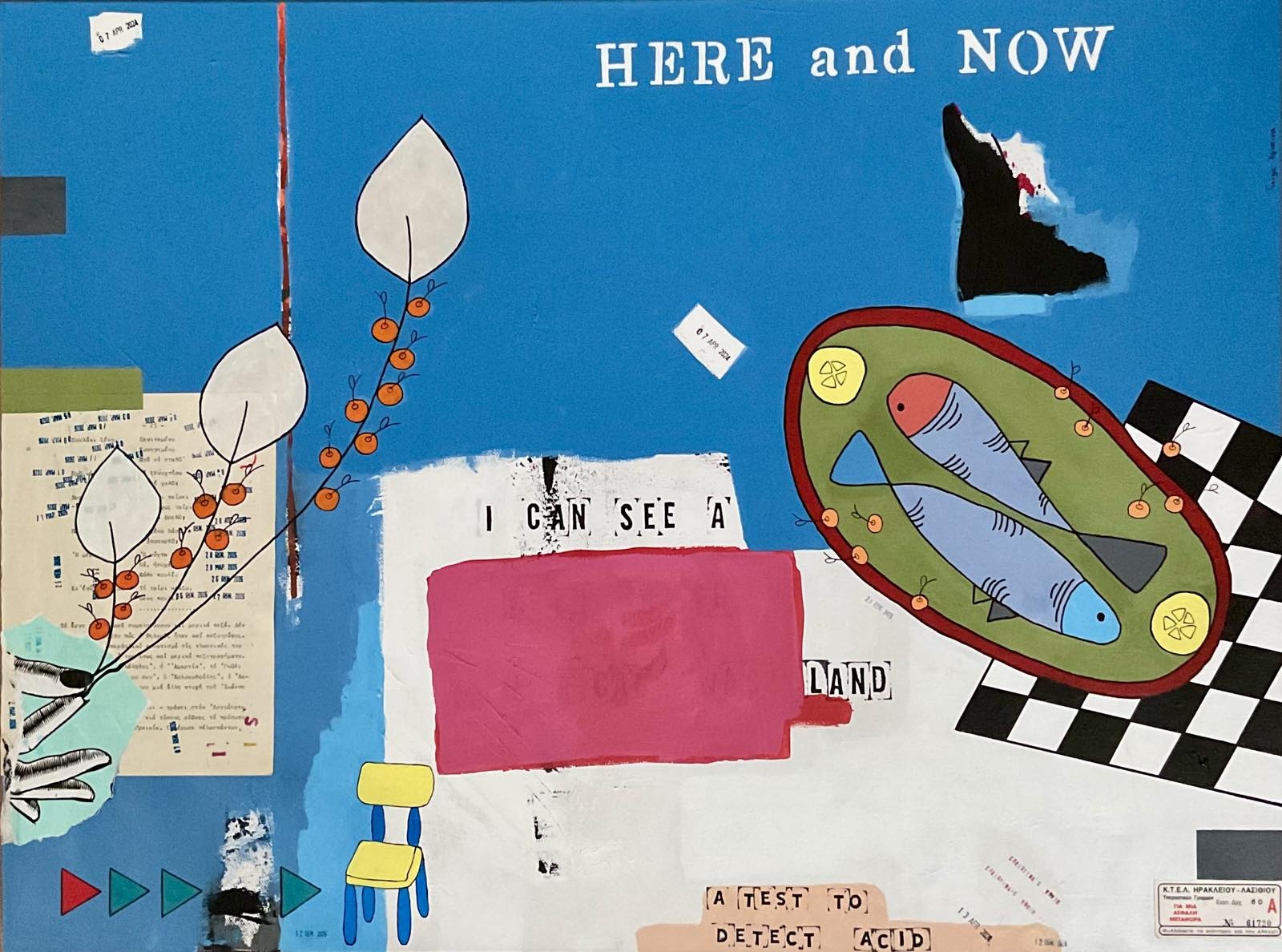
Suns, flames, eyes, birds, hearts, helicopters, airplanes, boats, and arrows appeared repeatedly in his paintings, rendered with bold outlines and striking color contrasts. Among these symbols, the suitcase became one of his most recognizable images, representing movement, displacement, and the enduring desire for escape.
In later years, Akrithakis expanded his practice into three-dimensional constructions. Using new and reclaimed wood combined with inexpensive everyday materials, he created assemblages that blurred the boundaries between painting and sculpture.
These works were often enhanced with painted surfaces, small electric lights, mirrors, and plastic flowers, reflecting his playful yet poetic vision. Alongside these constructions, he produced numerous collages and, in 1986, collaborated with sculptor Giorgos Lappas on the ambitious project Circus, further demonstrating his interest in interdisciplinary artistic expression.
Beyond painting and sculpture, Akrithakis also explored illustration, theatrical set design, and costume creation, extending his artistic language into literature and performance.
Today, Alexis Akrithakis is regarded as one of the most original figures in modern Greek art. His works continue to captivate audiences through their combination of humor, emotional intensity, and symbolic storytelling.
By rejecting convention and embracing freedom of expression, he created an artistic universe that remains both deeply personal and universally resonant.