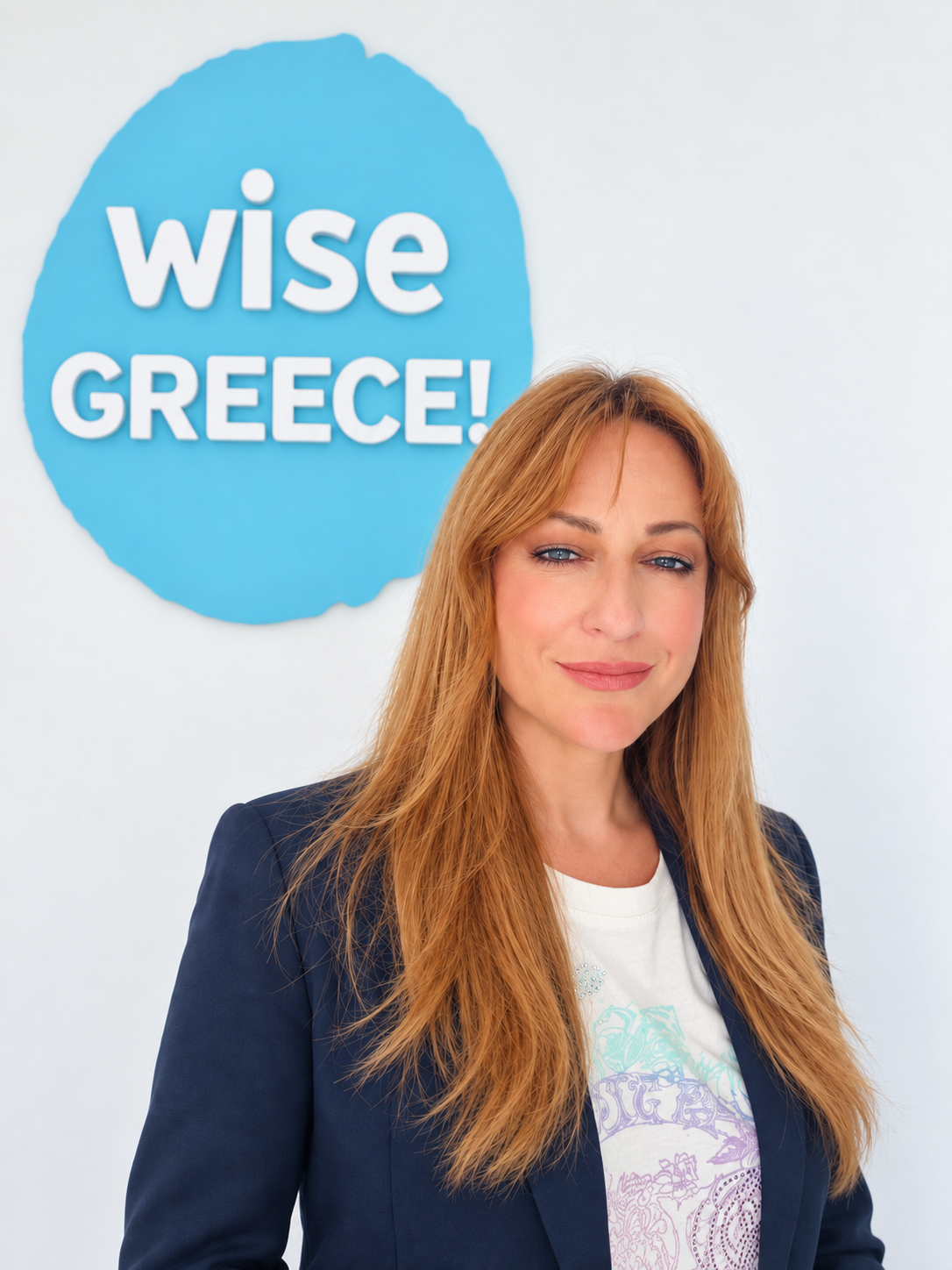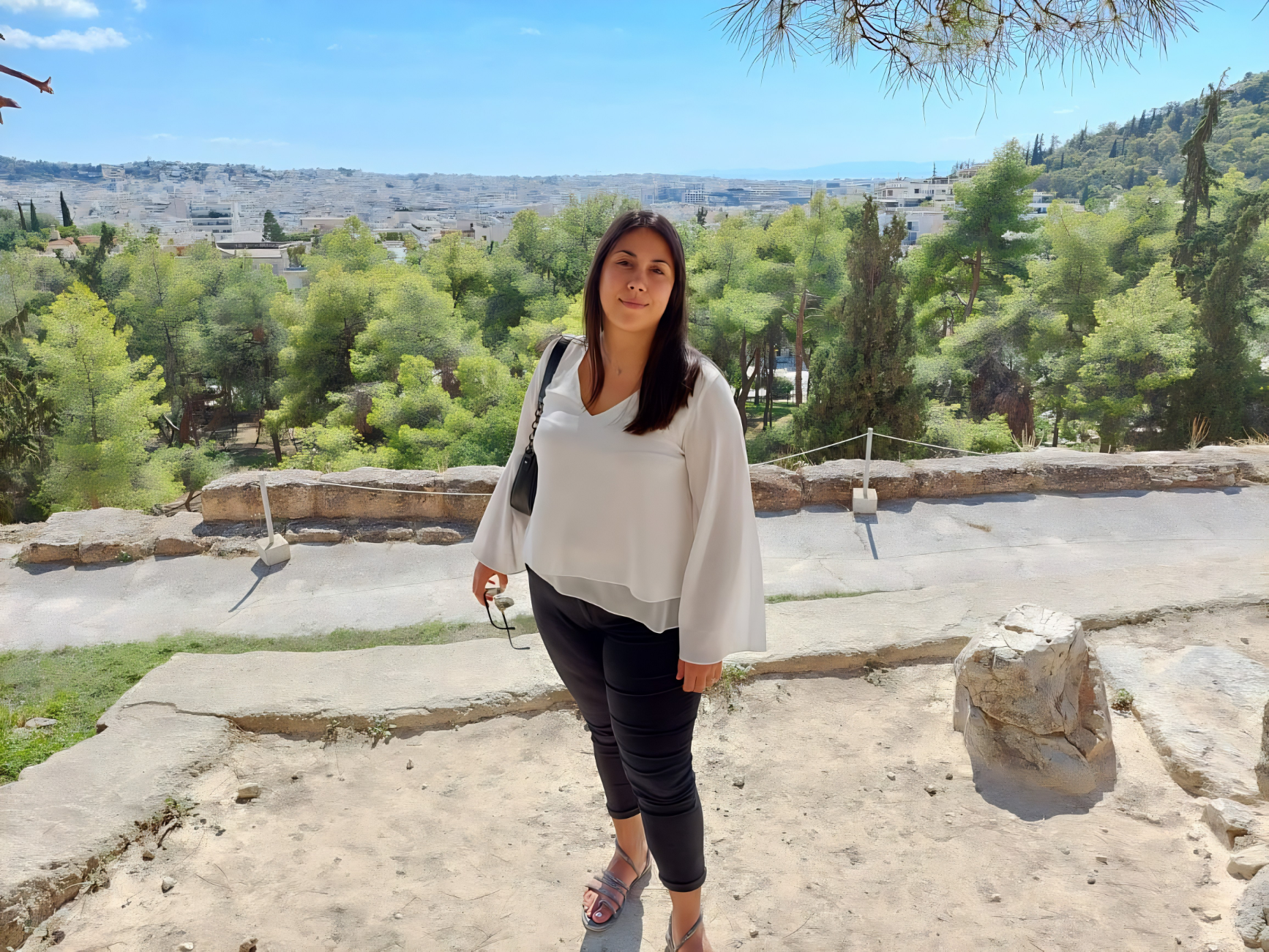
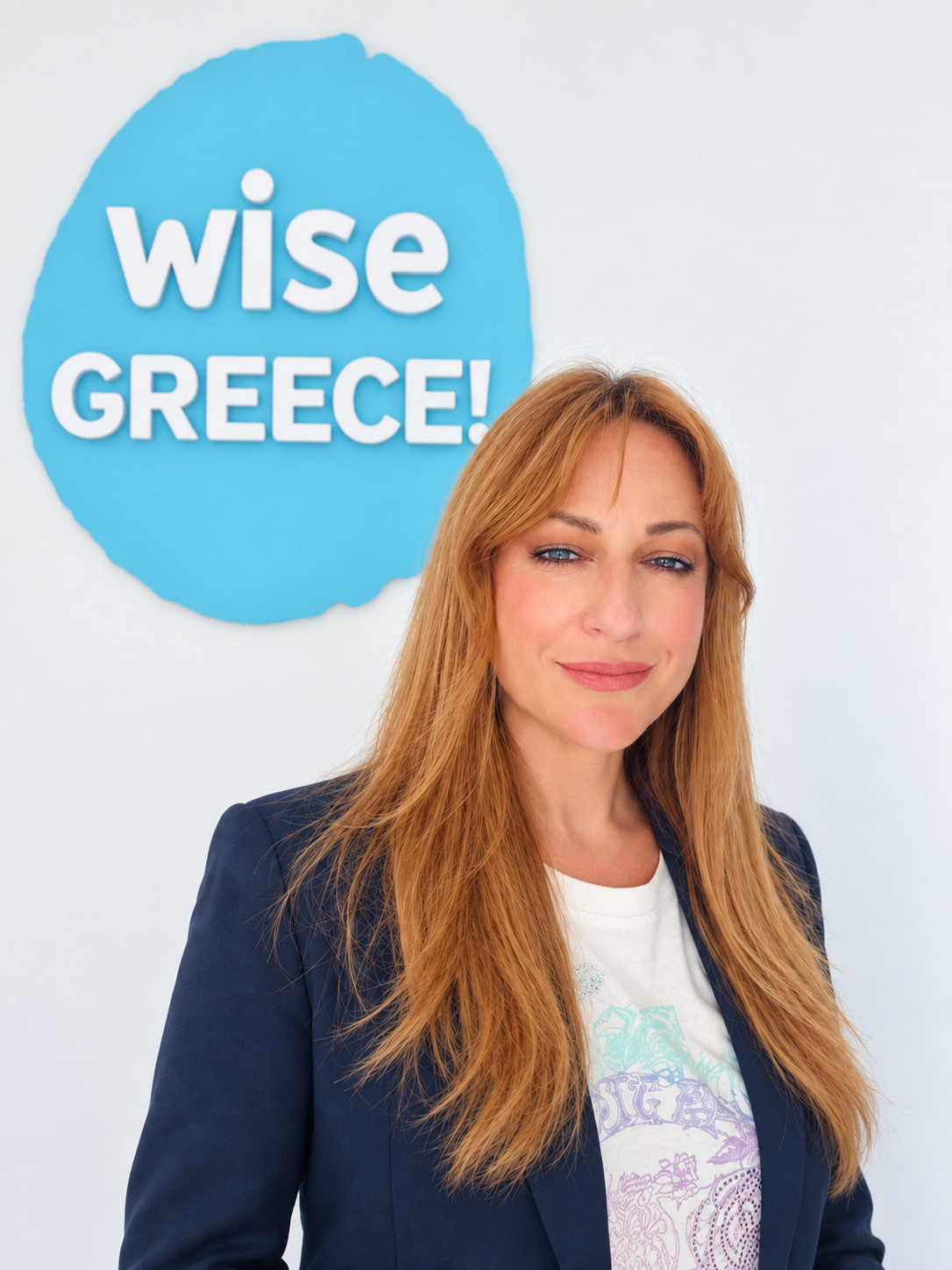
From selling hand-drawn maps to her schoolmates at just 12 years old to founding Wise Greece in the midst of one of Greece’s deepest financial crises, Melina has always been driven by ideas, communication, and the desire to create something meaningful.
Her entrepreneurial spirit appeared early, when she spotted an opportunity to help her classmates find the best neighbourhoods for Christmas caroling.
Years later, during university, her first official job as a radio producer gave her an early introduction to the power of communication and storytelling.
In 2013, these instincts came together in Wise Greece, a social initiative created to address two challenges at once: helping small Greek food producers reach wider markets while supporting people and families in need with food.
What began during a period of profound economic uncertainty has grown into a model built around the idea that business and social impact can work hand in hand.
In this conversation, she reflects on the experiences that shaped her journey, the motivations behind Wise Greece, and the challenges women continue to face in business and the social sector.
She also shares how the landscape has evolved over the years, and why greater visibility, mentorship and community are helping create more opportunities for women to lead and make an impact.
1. We are going to start with some icebreaker questions just to give our readers a little bit of a glimpse into who you are. So, what was your first job?
My very first “job” was actually when I was 12 years old. I used to sell maps to my schoolmates showing them the best neighborhoods for singing Christmas carols where people were most likely to open their doors and give them a little extra money! Looking back, that was probably my first encounter with entrepreneurship…
My first official paid job came a few years later, during my first year at university, when I worked as a producer at a radio station. So, in one way or another, I have always been drawn to ideas, communication and creating something of value for others.
2. As a child, what did you dream of becoming?
A lawyer, for some reason! I’m still not entirely sure why, but that was the dream.
3.You set up Wise Greece in 2013. Take us back to 2013. What led you to set up this project? What was your motivation?
It was 2013, at the height of one of the worst financial crises Greece had ever experienced. On the one hand, I saw many small businesses struggling to survive. Food producers, in particular, were creating wonderful products, the kind of food people remember when they visit Greece, but they often lacked the means and opportunities to reach the market.
At the same time, I saw charities and social organisations struggling to secure enough food for families in need.
I felt that these two challenges could (and should) be connected. That was the idea behind Wise Greece: to support small food producers by helping them promote and sell their products, while using the profits to provide food to people in need. I wanted to create something practical that could make a genuine difference on both sides.
4. Do you think women have to fight harder in business or charity?
And has this changed over the years?
One of the encouraging things about the social sector is that it has a particularly strong presence of women founders. Perhaps this is because it connects closely with the kind of purpose and impact many women want to create through their careers.
However, I don’t think the challenge is limited to one sector. Women often have to fight harder everywhere, especially when they are younger and must confront bias, prove their credibility and make difficult choices around motherhood, family and career.
Thankfully, things have changed since 2013. We have become much more vocal about these challenges. In the past, many women carried them quietly and often with a sense of guilt. Today, we talk about them more openly. There are also more women-focused networks, accelerators, mentoring initiatives and leadership programmes. The journey is still not equal, but a woman starting today can certainly find more support and a stronger community around her.
5. Which women in business inspire you?
So many women inspire me, and not always the obvious ones. Of course, I admire the CEOs and self-made women who have overcome enormous obstacles to succeed. But I am equally inspired by women I have met in small villages across Greece who have managed to build successful small businesses, often with very limited resources. I also think of mothers I have met raising children with special needs who, despite the challenges they face, remain deeply active in their communities, creating initiatives, supporting others and making things happen. Through my travels, I have also met remarkable women in Europe, the United States, the Middle East and many other places. Again and again, I have seen how capable women are, not only of succeeding, but of challenging expectations, breaking stereotypes and changing their communities for the better. Inspiration really can come from anywhere.
6. Did you always want to lead an organisation? Was that always an aspiration?
It was never particularly clear in my mind that I wanted to lead an organisation. In fact, I’m not sure many people genuinely aspire to leadership simply for its own sake. It is complex, demanding and often requires significant personal sacrifice. The idea of a perfect balance between work and life feels very far from reality.
What I always enjoyed, however, was building things from scratch and finding solutions to problems that others had accepted as unsolvable. When you see a need, create something that does not yet exist and find that no one else is stepping forward to make it happen, you naturally have to lead the way.
So, I wouldn’t say I was a born leader. Leadership was something I grew into because the ideas I believed in needed someone to bring them to life.
7. What does your typical day look like?
Honestly, it is quite hectic, probably like the days of many working parents! I wake up very early and either take my daughter to school or head straight to the Wise House, where I try to protect a few quiet hours for focused work before the meetings begin.
If I am not travelling for a project, much of my day is spent with my team: discussing our ongoing work, anticipating what comes next and designing new projects and solutions. Before becoming a mother, I would often stay at the office until very late. Now, I try to leave at a reasonable hour so that I can pick up my daughter.
From that moment on, I try to be mostly a “Mum.” She is four and has endless energy, so I need to find the mental and physical energy to be fully present, whether we are playing, arranging playdates, baking cookies or doing all the little things that come with life with a four-year-old.
Like many women, I find that I leave myself at the bottom of the list. But I have also accepted that perfect work–life balance does not really exist. Life comes in seasons: sometimes work requires more of you, while at other times you can give more attention to your personal life. The important thing is to make those choices consciously and remain present wherever you are.
8.What kind of barriers did you experience prior to your success?
There were and still are many barriers, not only for women but for anyone trying to innovate in a country where innovation has not always been given the value or support it deserves.
When I started, I was young, I was a woman and I was introducing a model of social entrepreneurship that very few people understood. It was difficult to earn people’s trust. Friends, family and society often encouraged me to find a “normal” nine-to-five job rather than take such a risk. At the same time, Greece was experiencing its worst financial crisis, and many of my friends were leaving the country in search of a better future. People frequently told me that I should do the same. Instead, I chose to stay and try to build something meaningful here.
Social entrepreneurship has also become far more mainstream. More people now understand that an organisation can combine financial sustainability with meaningful social impact. That does not mean the journey has become easy, but it is certainly easier to communicate the value we bring and to find people who believe in it.
9. With more than 100 Greek producers and 2,500 products participating, how do you see Wise Greece evolving internationally? Are there particular markets or partnerships that you believe could significantly increase the global visibility of Greek products and the organization’s social impact?
Supporting Greek producers and increasing their international visibility remain at the heart of Wise Greece. We are continuously developing partnerships and gradually entering new markets, but we approach international growth very thoughtfully. For us, expansion should not be like a firework—something that shines brightly for a moment and then disappears. It is about building lasting relationships with organisations, retailers and communities that understand the quality of Greek products and the social impact behind them.
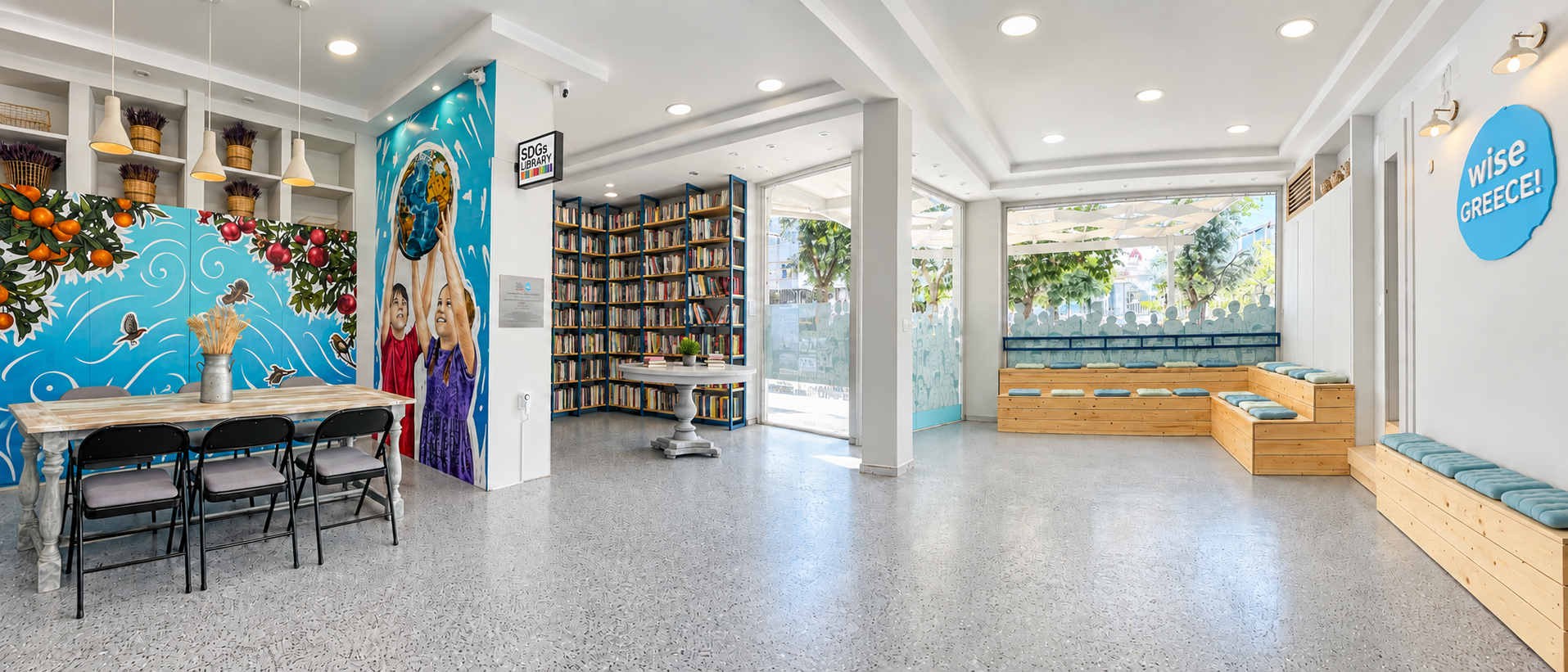
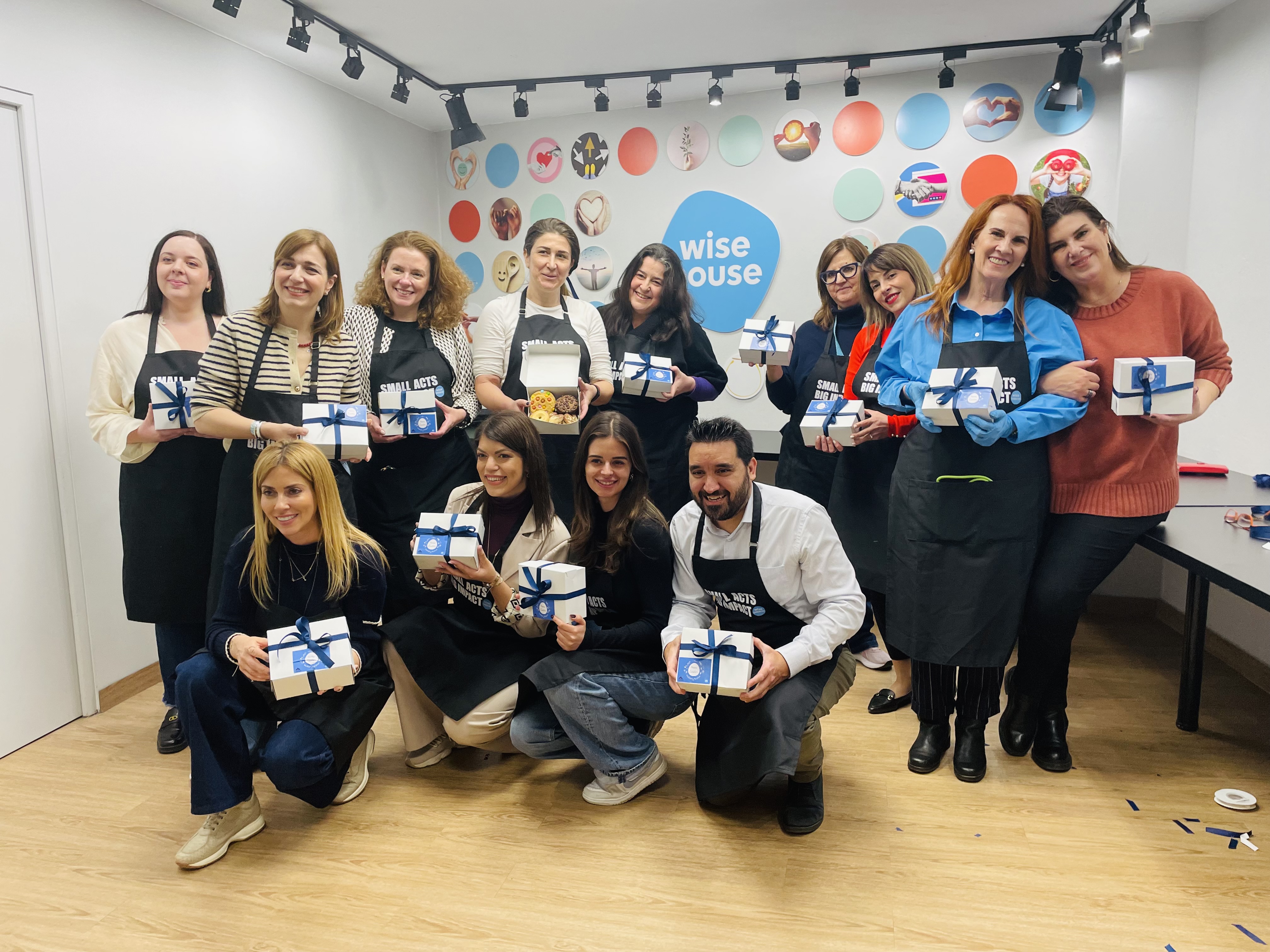
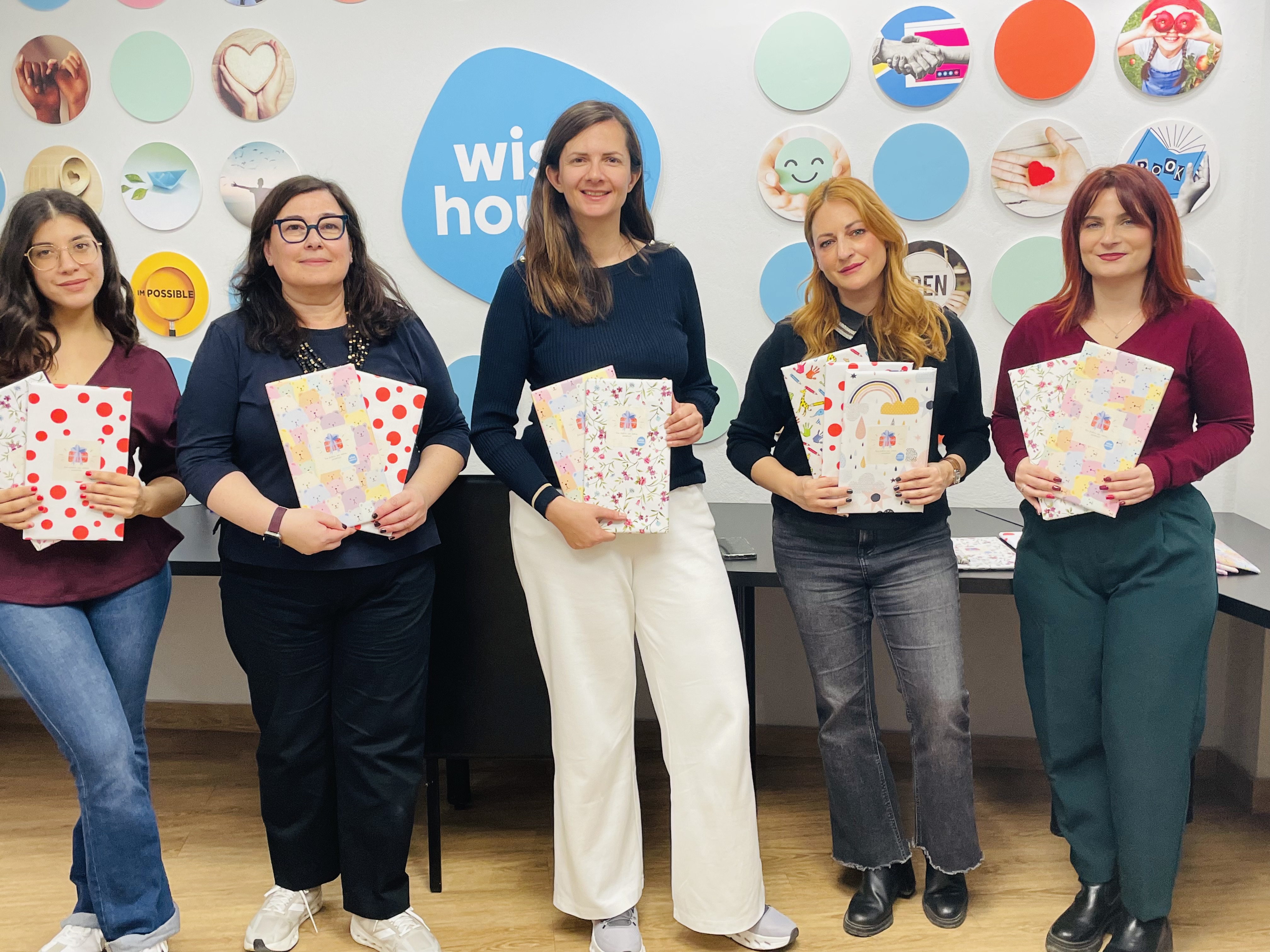
At the same time, we do not want our impact to be limited to products alone. This is why we created the Wise House: a four-storey space where people can discover Greek production, but also learn, collaborate and contribute. It hosts corporate volunteering and team-bonding activities, sustainability workshops for children and adults, educational programmes, community events and initiatives focused on topics such as upcycling and the Sustainable Development Goals.
The Wise House also hosts Greece’s first SDGs Library, with books organised around all 17 Sustainable Development Goals, and serves as the home of the Greek Chapter of the UN SDG Book Club. It enables us to connect producers, companies, schools, volunteers and communities under one roof!
So, our international vision has two dimensions: taking exceptional Greek products and their stories to new markets, while also developing the Wise House into a model of social innovation that can inspire partnerships and similar initiatives beyond Greece.
10. Wise Greece has been recognized by both the World Bank and the United Nations for its contribution to the Sustainable Development Agenda 2030. Which of the Sustainable Development Goals do you believe Wise Greece can have the greatest impact on in the coming years, and what would success look like to you?
Wise Greece initially had its strongest impact on SDG 1, No Poverty; SDG 2, Zero Hunger; and SDG 8, Decent Work and Economic Growth. Through our model, we provide food to people experiencing poverty and food insecurity, while supporting small Greek producers, helping them strengthen their businesses, reach new customers and preserve jobs within their local communities.
Looking ahead, however, our main focus is on what we consider one of the most important goals: SDG 17, Partnerships for the Goals. We strongly believe that no organisation, government or company can achieve the Sustainable Development Goals alone. Meaningful progress is only possible when different sectors combine their knowledge, resources and networks around a shared purpose.
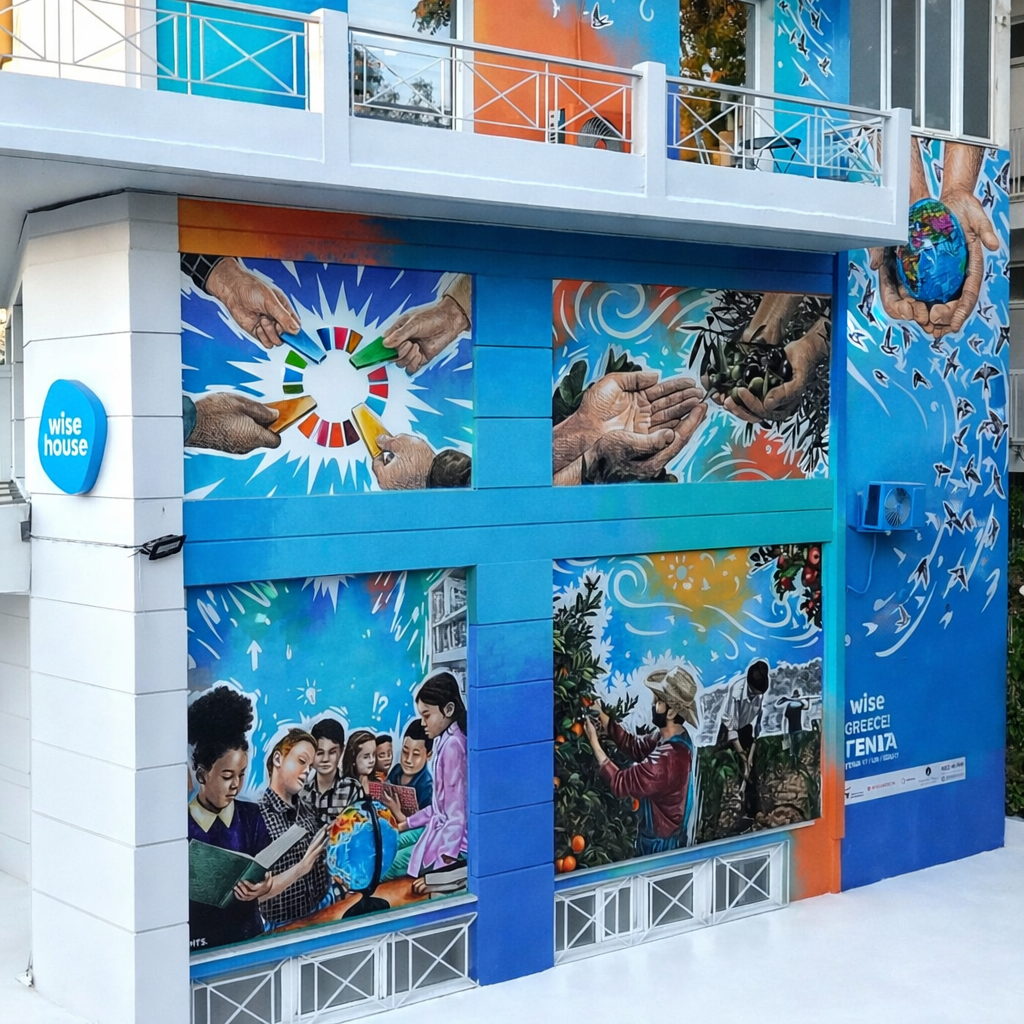
This belief is also reflected in the ten-meter mural covering the main exterior wall of the Wise House. The mural is dedicated to SDG 17 and serves as a visible testament to our commitment to collaboration.
To me, success would mean creating an even stronger ecosystem of producers, companies, institutions, schools, volunteers and communities working together, allowing us not only to expand the reach of Wise Greece, but also to multiply the impact that every partner can achieve individually.