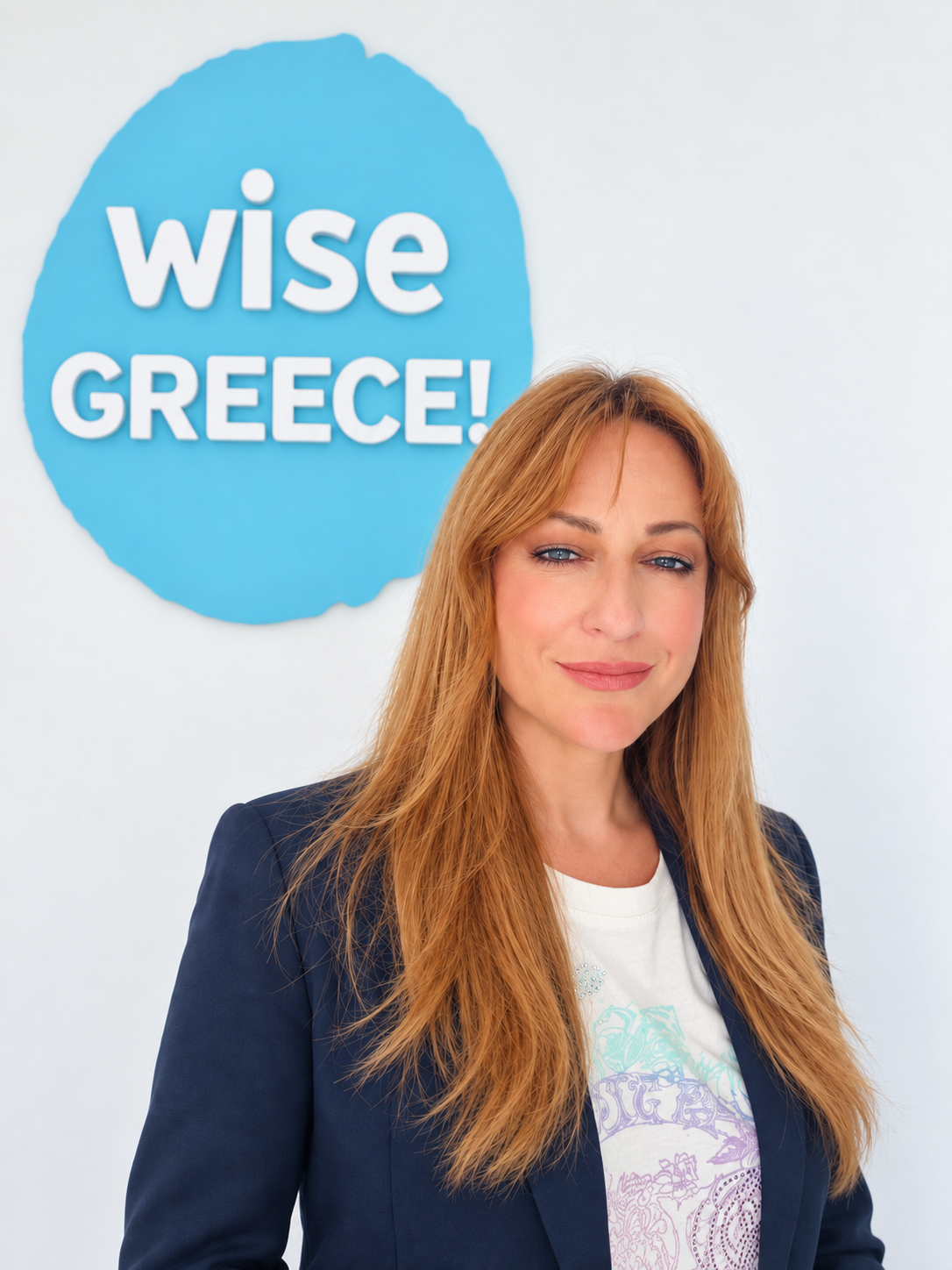

Alexandra Athanasakou, Founder of Data Tutor, has built her career at the intersection of Data Analytics, education, and human-centered leadership.
What began as a passion for mentoring during her university years evolved into a mission to make data education more accessible, practical, and emotionally supportive for career changers entering the tech industry.
Through Data Tutor, she has helped hundreds of students develop skills in Data Analytics and Business Intelligence while fostering a learning environment rooted in mentorship, confidence-building, and real-world application.
In this interview, Alexandra shares how teaching shaped her professional journey, why representation matters in technology, and how empathy and flexibility can redefine leadership in the future of tech.
My journey in teaching actually started back in my university days, when I began mentoring kids and teenagers. Looking back, it was one of those defining moments.
I needed to challenge myself, to see if I could take complex concepts that I was just mastering and share them in a way that truly resonated with someone else.
That experience changed how I saw my future. It made me realize that teaching wasn't just a temporary gig; it was a core part of who I am.
When the opportunity came to volunteer as a Data Analytics Instructor, it felt like the most natural step. It was the perfect bridge between my daily professional practice and my love for human connection.
At first, I was just delivering an existing curriculum. But soon, the world of Learning Design opened up for me. I started organizing material, writing new educational content, and redesigning the student experience from scratch.
That shift sparked my first major initiative: blending Data Analytics and Education as the Education Manager at WITSIDE, while simultaneously pursuing my MA in Learning Design at the American University of Greece.
The most beautiful part of this journey is watching the mental shift happen in real-time.
When students first look at data, there is usually chaos. They feel overwhelmed by the blank canvas. But as we work through it together, that chaos turns into clarity.
And from clarity, they build the genuine readiness to step into a new job market. Moving people through that transformation is our core mission at Data Tutor.
On a larger scale, teaching data allows me to help shape the local tech community. For a long time, high-quality data content was something you could only find from American creators on YouTube.
My dream has been to bring that same high-level, practical knowledge into our local language, making advanced concepts feel accessible, relatable, and human.
This is a reality I faced early on. When I walked into my Informatics department at the University of Piraeus, women made up barely 20% of the room.
I am convinced that having more women in data is a massive asset for the industry, and I see the proof every single day through my female students.
The market demand for these roles is huge, and women bring a powerful combination of skills to the table.
Curiosity, strong organizational habits, empathy, and deep analytical thinking are exactly what modern data teams need to solve real business problems. It is about bringing a well-rounded perspective to a field that thrives on diverse thinking.
The hardest part is often figuring out how to break through the noise and stand out in a highly competitive space. Starting out can feel incredibly daunting when you are staring at job listings that feel disconnected from your reality.
That is exactly why we focus so heavily on the practical side of things. University degrees and theory-heavy certifications are a start, but the real breakthrough happens when you gain hands-on experience and build something tangible.
Amid all the information overload out there, staying focused on what truly moves the needle for your career is a challenge.
That is why mentorship means so much to me. Sharing the real, unvarnished stories of what worked and what went wrong saves people precious time and builds the resilience they need to keep moving forward.
This is something I don't talk about very often, but it is incredibly close to my heart. Since I began teaching in 2021, we have maintained a 45% female participation rate across our programs.
I often look at that number and think about why it happens. I believe it comes down to creating a safe space. When women see another woman guiding them, the hesitation fades.
They find a space where they can ask questions without judgment, share their fears about changing careers, and trust the process. Knowing that we are building this data journey together is what keeps me inspired every single day.
I want to see a shift from performative checklists to genuine, merit-based opportunities.
Right now, many companies rely heavily on diversity mandates or strict internal percentages to show they care about inclusion. While I understand these programs are trying to fix a deep-rooted imbalance, they often feel restrictive.
They miss the bigger picture. True progress shouldn't be about fulfilling a quota; it should be about recognizing talent, skills, and potential, regardless of gender.
I want to see leadership roles earned through real performance indicators, encompassing both technical mastery and essential human skills like empathy and collaboration.
At the same time, we need a massive shift in how we view workplace flexibility. True flexibility, like adaptable schedules and remote-friendly environments, shouldn’t be treated as a luxury or a special corporate benefit anymore. It needs to be the standard.
When we build workplaces that support life outside of code, we naturally create spaces where women can thrive, lead, and shape the future of technology on their own terms.
Building Data Tutor from the ground up is a major milestone. How has your experience as a woman in tech influenced your entrepreneurial journey and the way you lead your company?
When I decided to build Data Tutor, I knew I didn’t want to create just another cold, corporate training platform. There are plenty of those out there.
My journey as a woman in a male-dominated tech environment taught me exactly what was missing from traditional education: empathy, deep listening, and a genuine sense of safety. I wanted to bring those exact values into my business strategy.
For me, entrepreneurship isn't about aggressive scaling or treating students like numbers in a funnel. It is about leadership through connection.
By embracing what some might call "soft skills" - which I consider core strategic strengths - we built a learning ecosystem where people feel seen.
Being a female founder in this space allowed me to see the blank canvas of data education differently, turning Data Tutor into a welcoming place for transformation rather than just a technical bootcamp.
For many career switchers, looking at data for the first time brings up a lot of self-doubt. How does Data Tutor’s philosophy address this emotional barrier?
The biggest hurdle for anyone changing careers isn't the syntax of SQL or mastering a Power BI dashboard. It is the imposter syndrome.
People come to us carrying the fear that they aren't "techy" enough or that they started too late. If you only focus on the technical tools, you lose them before they even write their first line of code.
That is why our philosophy at Data Tutor starts with the human element. We focus on building confidence first.
We structure our learning path around "small wins" - tangible moments of success that prove to the student they can do this. We don't just hand over a library of videos and wish them luck.
We offer a safety net through continuous mentoring and real feedback. When you shift the focus from the fear of failing to the excitement of creating a portfolio project, the anxiety melts away.
We are not just teaching data; we are walking alongside them as they rebuild their professional identity.